
Have you ever filled out an activity registration form for your neurodivergent child and stopped at the box: “Any learning or behavioral diagnoses?” Followed by, “Does the child take any medication?” You stop and think, “Well, do I share our life story of diagnoses with this art workshop teacher?” “Will the soccer coach judge, stigmatize or patronize my child if I disclose?” “Is it helpful to share or just causing more problems?”
These are legitimate questions, and not everyone is entitled to all the information about your child’s diagnoses just because they put a box on their form.
Maybe it didn’t come up because of filling out a registration form. Rather, you notice a struggle and misunderstanding for your child in an extracurricular activity. It could be small things, like a scoutmaster mistaking your child’s earplugs for “goofing off and not listening” or a coach becoming frustrated or shaming when your child misunderstands verbal directions. Moments can arise when you realize it makes sense to share with certain leaders that your child has a sensory need or learning difference.
One first thought about who to share with is to keep it on a “need to know” basis. Is this a person that needs more information about your child? Do you see a need for the information to be shared? Or could sharing possibly prevent a future misunderstanding? These are good reasons to share. However, as I’ve said before, not everyone is on your child’s team. There are people out there who will deny or disregard the label, not keep information private, or worse, blame you or your child or bring up pseudo-science or pseudo-spiritual myths in regard to the cause of the diagnosis. I’ll take a hard pass on all of that.
The “when” to share starts with deciding if your child could benefit from an accommodation or understanding that would come from a reach out. Remember though that you’re under no obligation to share diagnoses. That information belongs to you and your child.
In a blog post on disclosing learning differences, Understood.org brings up a really good point: what is your gut telling you about the coach or leader? Do they seem like someone who wants to help and collaborate, or like someone who doesn’t care or may use the knowledge inappropriately? Don’t underestimate your parent gut. It’s easy for neurodivergent parents of neurodivergent kids to feel pressure to ignore their sensitive intuition. Other parents aren’t worried about things you might be worried about. And, if you’re like me, you’ve grown up with the world telling you you’re too sensitive, too loud, too much, not enough, too emotional. We start masking, jumping through hoops, and slowly over time, we get accustomed to ignoring when we feel uncomfortable so that we make those around us happy and comfortable. I’m trying to stop doing that, but it’s a process. Your gut matters. It matters for how you feel about you and it matters for how you feel about your kid interacting at scouts. And a parent gut tends to be correct, even if it’s tinged with the bias of your own trauma or past.
One possibility is to start with less information and see how the organization or leader responds. Less information might mean explaining an accommodation your child needs right now in a situation that has come up, and not sharing the specific diagnosis. “Jimmy can have trouble with verbal directions. Is there a way we can work around this? Could someone give instructions to him written down, or physically demonstrate?” Do they believe you? Do they respect the information you have shared, and use it to better support your child? Does nothing change?
If they don’t believe you, or worse, turn it around to blame you, or they’re completely unwilling to flex or collaborate to support your child, then it may be you are being given a gift. The gift is the knowledge that this place or this person isn’t part of your child’s team. Sometimes, when I discover a program or person is not part of our team, it means we leave. Especially if they responded to a request in a way that gaslights or blames, we’re out of there. Other times, it means we take a step back because we can’t trust or depend on them the same way. It’s not someone we confide in. We can continue to watch and decide going forward.
On the flip side, if you tell a small amount of information and the response is collaborative, affirming, believing, and there is follow-through, then you may have discovered someone who is on your team. *Cue Chariots of Fire Music.*You may find you can share additional information.
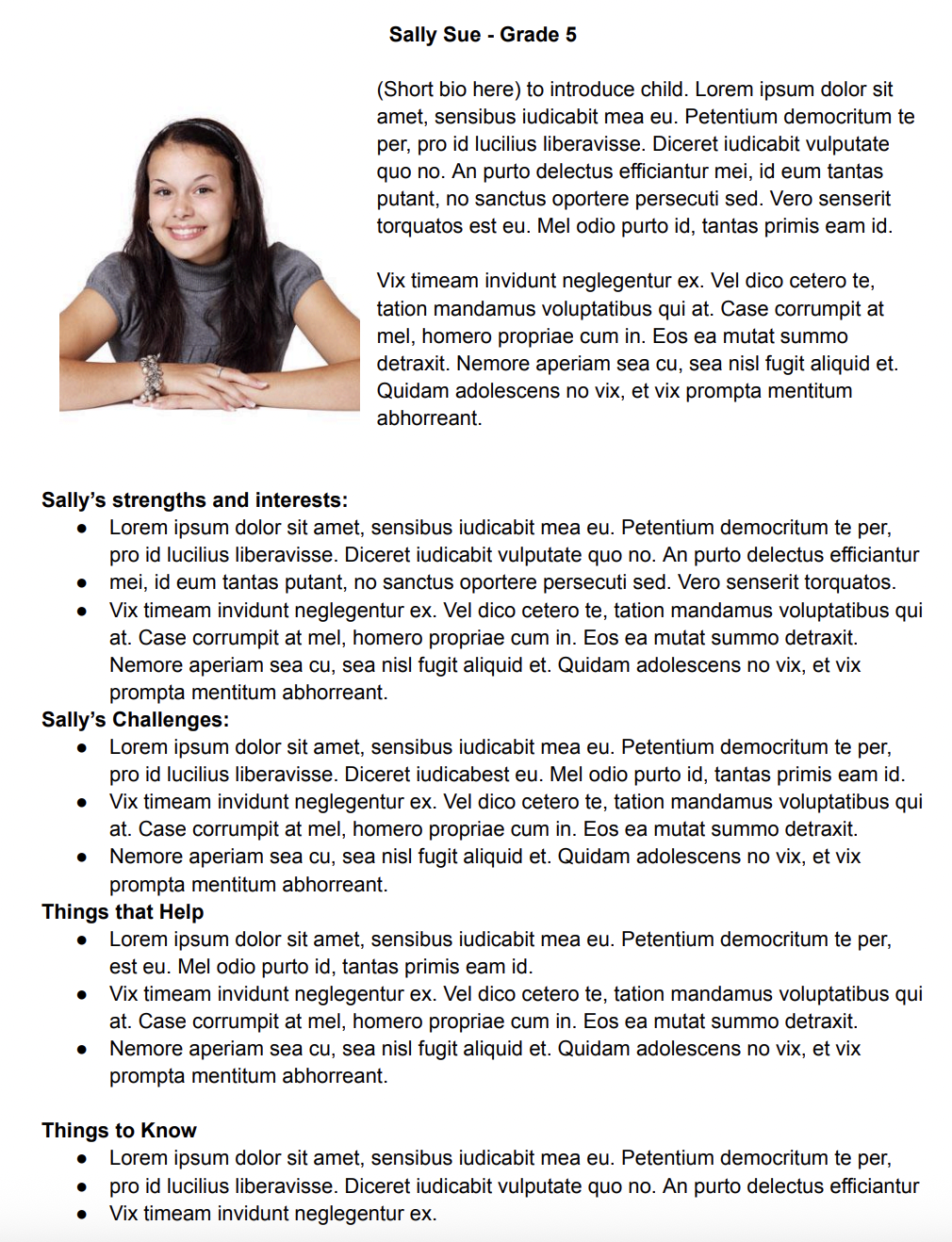
If you discover the coach/ art teacher/youth pastor/violin teacher is collaborative and affirming and you’re ready to share more information, a short bio that highlights strengths, needs and potential supports could be perfect for communication. Tip: keep it strengths-based, keep it short, and be slow to share labels. For a younger child you could create it yourself and as they get older, they could be more and more involved in the process. Involving your child allows them to come up with ideas, solutions and to practice self-advocating.
I have a template you could work with, here.
So ultimately to recap, wait to share until there is a need or benefit. Share with people you trust who’ve proven to be affirming and collaborative. Start small. Test the waters. Keep in mind you can share needs and suggested support without needing to share specific diagnoses. This process can be a great opportunity to tease out whether a program is a good or poor fit for your child and what you want to do about it going forward.
Leave a Reply