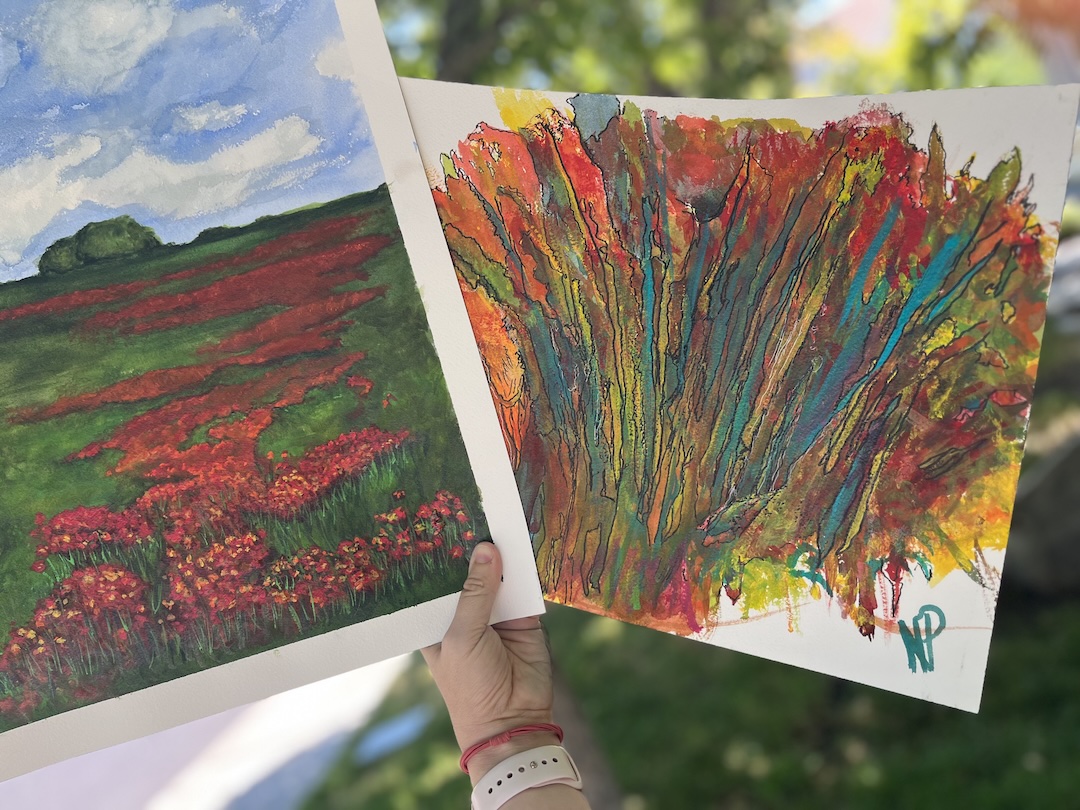
When my mom got sick, my dad was already fully incapacitated, in hospice care with Alzheimers and Parkinson’s. He wasn’t able to be there for her, to understand what was happening or carry any of it for her. Nancy (my mom) was just a “spring chicken”- in her 60s, and grieving the anticipated and continual loss of her husband. She was trying to visualize the next chapter of 20 years after he would be gone. She asked me, “How do I move forward without him? How do I go on?” I told her, “You don’t. I think you’ll be like a phoenix. This will destroy you and then you’ll have to rise up out of the ashes into the new, and you won’t be the same.”
Maybe a couple weeks after I spoke those words to her, a routine doctor appointment turned significant. She had a brain tumor. That was September 28th. She died on May 1st of a rare and terrible brain cancer.
Those months were filled with emergencies. My children were 7, 10 and 12 and we homeschool. A few days after her brain surgery and terminal diagnosis, tufts of my hair started falling out in the shower and I had kidney stones in the middle of the night. Over the months that followed, I gained 20 pounds. I didn’t have time for makeup or maybe even to put on fresh socks every day. It was my kids’ needs and my parents’ needs. That was all there was space for. When I could, I tried my best to breathe into that oxygen mask, so to speak. Nothing else.
I have a distinct memory of being on the phone with 911, using my shoulder to press the cellphone to my ear. I was explaining symptoms and sharing medical stats, hearing the distant sound of sirens approaching, and at the same time I was methodically spreading peanut butter on slices of bread for PBJ sandwiches. The juxtaposition of the emergent and the mundane was surreal. If I was about to follow the ambulance to the hospital, I wanted to have everyone’s lunch made before I left. Lunches on the counter, kid instructions for my husband in a text, and then stepping out to meet the firetruck, again, in front of our house. The kindness of those first responders! I’m reminded of Mr. Rogers’ advice, given to him from his mom. (When scary things happen,) “look for the helpers. You will always find people who are helping.” Those first responders were there for us at each of our worst times. They gently picked my mom up off the driveway, once. There was a night they arrived to find us in the living room watching Pollyanna, trying so hard to help my mom stay calm while we waited for help to arrive.
Another time the helpers came and my mom was screaming. I put my arms around her and we calmed down our breathing together like a team. The firefighters waited quietly, huddled with us in that very small, beautiful space that was my mom’s art studio. Her grief was unfettered that time. She vacillated between wailing and hilarity of laughter at our situation; there would be no final chapter. Before the firefighters left us checked in at the hospital, one asked Nancy if he could pray for her. It was a generous and appropriate offer, as he could tell from the context of our time together that my mom would appreciate the prayer. What a kindness! I will never forget.
They were there that final time, too. Lots of sirens. They tore through the house the moment I opened the door, before I could explain that they didn’t need to run.
My mom. She was an artist. Vibrant. Funny. Silly. Passionate. A dreamer. She went most of her life undiagnosed 2e. She had one of those childhoods where doctors could say uncomfortable things like, “Most people don’t come out of that kind of childhood okay.”
Click for a 2e quick definition
2e stands for “twice exceptional.” This is a colloquialism used to describe someone who is both intellectually gifted and also has disabilities that affect learning or interaction with others. An outlier twice.
With brain cancer, my mom began to lose her “filter” quickly. By filter, I mean that quick pause when you check yourself before you say or do something over-the-top. She became larger than life. She turned into a teenager and our roles slowly began to reverse. I had to make sure she turned out the lights and went to bed. I scheduled all her appointments and explained things to doctors. I could recite all her medications, dosages, emergency medications, canceled medications, side effects and side effect work-arounds. I comforted her when she had a bad dream. Near the very end, the full circle completed when she called me, “Momma.”
Here are some things I think could be helpful to know:
- In extreme challenges, 2e adults, just like kids, can lose the ability to compensate and mask for their quirks and disabilities. Gifted overexcitabilities can become larger than life, like a star going into supernova. My mother absolutely went supernova. It was spectacular and devastating. There were people who weren’t up for “no-filter Nancy.” It panged me as I pushed her wheelchair, to see someone turn their head and pretend not to see us. They didn’t want to get stuck in a conversation that might go too long. But there were others who leaned in. She touched their lives with her vivacity and they in turn lifted us up on our final journey.
- If a person had a difficult childhood, as they approach death their mind and body might start unpacking and processing trauma. It could be like an internal projector is left running. They are experiencing their last opportunity to set things straight and confront the past. Adding confusion and the loss of a filter to that is intense.
- When someone you love is approaching death, make sure that you say anything you want to say, soon. Today. Really, today. Or tomorrow. Once the process starts, it can go quite fast and your opportunity has suddenly been left behind.
- Advocating for a vulnerable and suffering parent in the medical system can be similar to the complex process of advocating for a vulnerable and suffering child in the education system. The experience and result is highly dependent on whoever is in charge. At times, you may be in a situation where everyone believes you and is fighting for and supporting your loved one. At other times, it’s possible to be in a situation where your loved one is unseen and you will need to fight loudly. You’ll need to understand your legal rights and be ready to take strong action. These two extremes can even occur at the same hospital on different stays. There are so many rockstars and helpers to look for in both settings and we honor and appreciate them. That can hold true while we’re also aware and responsive when the system in place is failing our loved one.
- Look for the helpers. Mr. Rogers carried wisdom. If friends and family ask to help, accept it. Tell them specifically what they can do for you. Drive your child to the Park Ranger Science Class? Bring your mom soup? Drop off our Amazon returns and library books? The helpers kept my head above water and I will always remember each of them with appreciation.
- The bittersweet. I’ll never regret a moment of the care that I gave her. I was given the gift of being there for her. She passed in my arms. I’m thankful!
- Children may be quiet. Don’t worry if they don’t seem “sad enough.” There is no right way to grieve. It can happen slowly in waves over time. Don’t forget to talk about the loved one. Look for ways to involve the kids. My youngest requested that we place poppies in with my mom to be cremated. I let him pick the wild poppies for us to use. As a family, we held a new coat drive in memory of my mom. Look at photos. Remember jokes.
- It’s okay to feel relief when the transition is completed. That doesn’t diminish your grief or your love.
- This pertains to a hospice situation. If you are present with your loved one when they pass, don’t be frightened if it starts to seem subtly like they are still breathing again. Our eyes can play tricks on us, and our mind can’t conceive of them holding so still. If there is no hospice nurse attending, cover your loved one with a blanket so only their face shows after they pass. Changes occur rapidly and this will make it less unsettling.
- Last, and while I have focused on the exprience with my mother’s transition in this post, I want to add one thing from my dad’s end-of-life experience. No matter how hard you try to be there with them when they pass, some people will “let go” when you step out of the room. Don’t feel hard on yourself if you weren’t there for the last moments. Perhaps for someone it’s the right time for them to release while their loved ones aren’t present. It may be what they wanted and that is outside of your control.
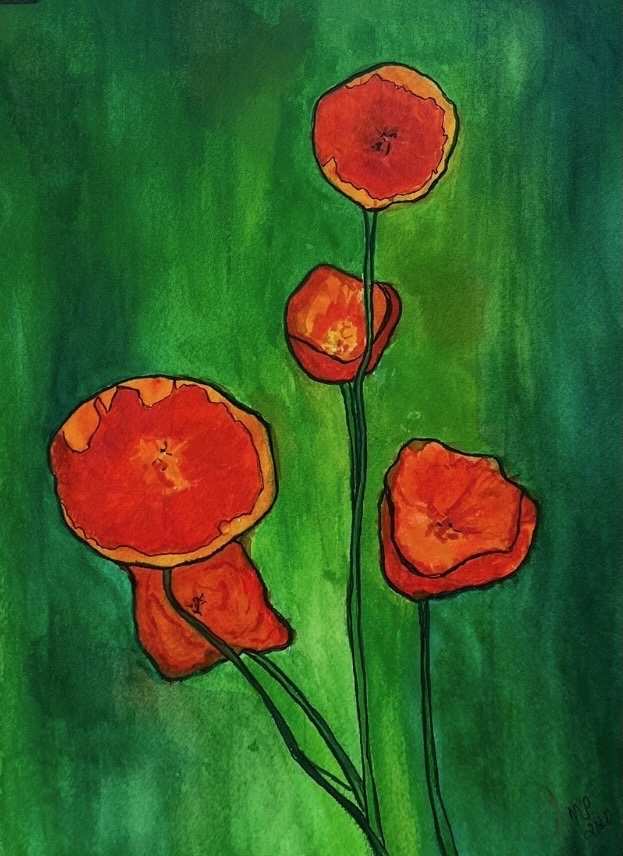
Coming back to that conversation with my mom, about how she’d be a phoenix. She didn’t end up living past my dad but instead, preceded him by ten months. It turned out, rising up out of the ashes into something new was my story. My mom was known for her beautiful paintings of wildflowers. After moving from Texas to California, she began to paint California poppies. I’m surrounded by her paintings in my home. Admittedly, I’m a little greedy; I’ve gifted, donated and sold a number, but I like to keep many of the paintings close. There’s a kind of poppy native to California, nicknamed the “fire poppy.” It’s rare to find a sighting as the seed lies dormant for years. When there’s a fire, it then germinates and springs up out of the ashes to share its brilliance and begin the rebirth of something beautiful in the empty remains of charred soil. It’s been my challenge to spring up into the new things since losing my parents. This blog is one of them. I’ve started doing some public speaking around neurodiversity and music, and I’m writing a book. I began fostering horses about a year ago, and I’ve delved into learning Spanish with the hope of finally achieving fluency. These are my “new things” as I explore this next chapter. Like the paintings around my house that are a daily reminder, when I work at these goals, I feel a connection to my parents. I think they’d be proud.
With so much love,
Christina

Leave a Reply