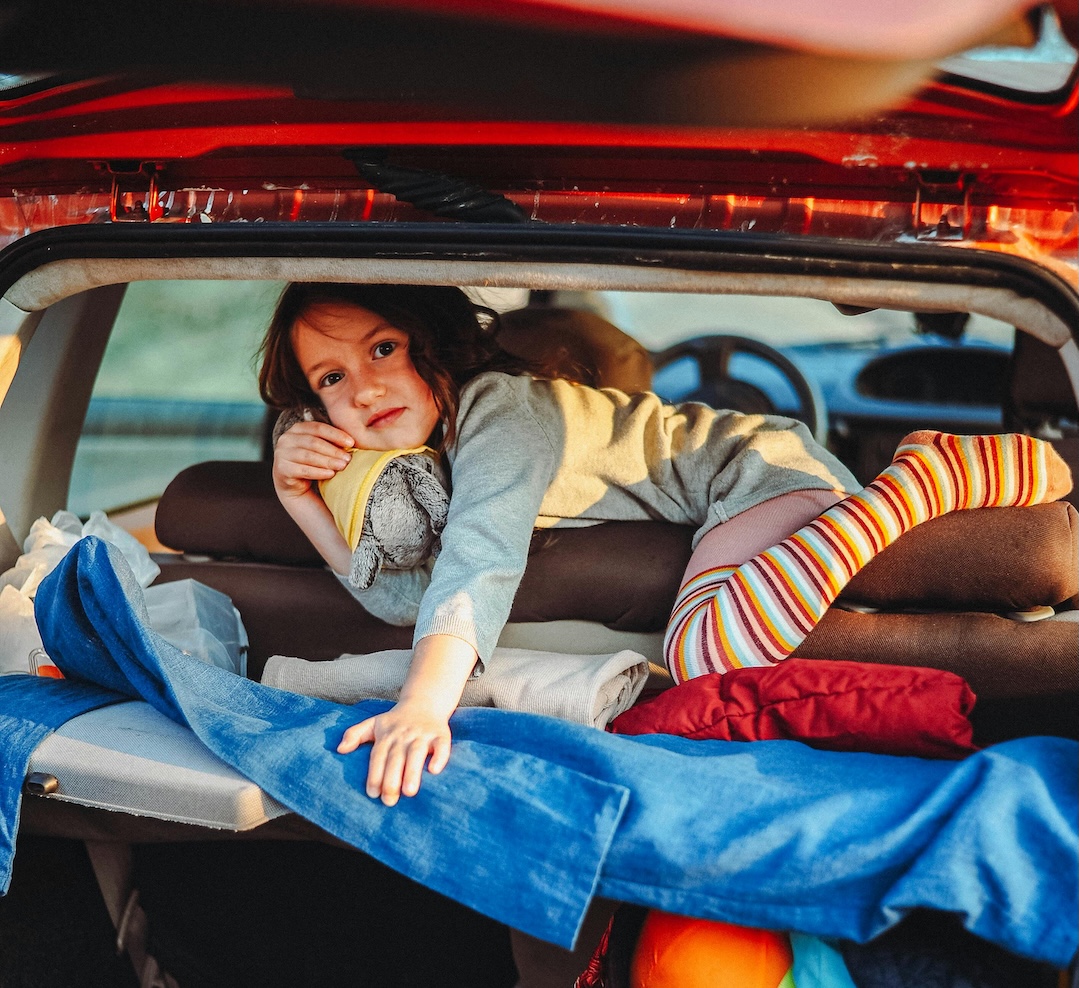
Vacations and travel for neurodivergent families (parents included!) can be such a challenge. Routines get broken, food changes, spaces may be confined, sensory input floods, weather differences. Sleep is harder. But travel can also be awesome, and a little awesome may be worth some risk and struggle. What we want to do is to minimize the struggle.
If you’re not quite ready to travel, that’s your call. It’s okay to decide the struggle may be too great and not worth it, yet. We’re just starting to embark on bigger travel the past couple of years, and I’m writing this because I’m nervous about our next trip. It will be wonderful. But when the kids were younger this would have been too much, and I feel a touch of “old school” anxiety as the trip approaches. It’s the right time for us to do this and I can be brave! It’s okay to be nervous. It’s okay to wait. It’s also okay to start very small. Baby steps. Do what works for your family. When you are ready to step out, here are some things that have been helpful for us.
Everyone needs their own space. The airbnb/VRBO system has been quite helpful for us as a family of five. A vacation space where someone is able to shut a door and spend time alone in a room does wonders for allowing our family of sensory-sensitive introverts to recharge. That doesn’t mean everyone must have their own bedroom- I get that may be cost-prohibitive (it is for us!) and may make finding accommodations impossible. You just need a designated space where people can take time alone. Sometimes we’ve offered that kids can retreat to the parents’ room, if the kids’ setup doesn’t offer isolated space. So, our bedroom is a designated safe space where a kid can retreat. When a kid goes to the designated space, everyone is supposed to leave them alone. If you’re in a tight, single room hotel room and there isn’t space to disappear, you might need to get a little creative. Some ideas could be to let a kid take extra time reading in the bathroom, or to turn a closet, with door ajar, into a cozy nook (you could line it with a spare hotel blanket). Another idea would be to use a spare sheet to make a fort attached to whatever chair or desk is in the room. Hair ties or chip bag clips in a pinch can be used to secure the fort blanket in place.
Consider driving instead of flying. Then, you can be in the car space that the kids already find familiar. You can make stops to take a break whenever needed. You’ll have more control over the temperature and noise level. There’s no wrestling carseats in and out of cars or hoping the rental carseat isn’t gross. It may be easier to bring along some of the kids’ toys or extra gear. You can even bring helpful food items. You’ll get to avoid the stress of airports and car rental lines. If you fly, my past blog on navigating airports with neurodivergent family members might be helpful.
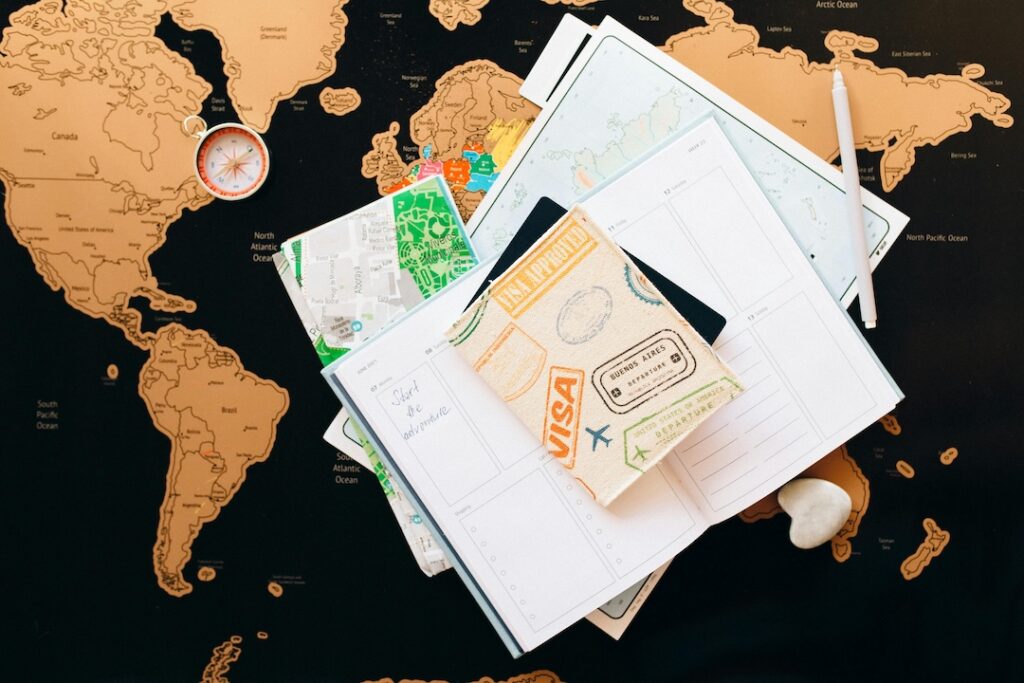
Visual reminders can help a lot, so everyone feels in-the-know and really understands what to expect. Consider creating a binder of the trip with itinerary and printed pics of landmarks or vacation spots. You can even include photos of the hotel room or airbnb off of the website. Pictures are really great for kids who are dyslexic or not reading. You could just create something digital, but I think a tangible guide you can flip through could also be beneficial. Include reminders of what the weather is likely to be. You can also often pull up video walk-throughs of tours and experiences, including airports terminals and amusement park rides. Kids can watch ahead of time and know exactly what to expect. This will also lower the sensory load because they won’t be absorbing entirely all-new information when they arrive at the special event.
Collaborate with your child: what would make the trip better? Bringing your own pillow or weighted blanket? Headphones? Specific snacks from home packed? Not only is the feedback helpful, but when we pull in our kids, they have more buy-in and are invested.
Think about sensory accommodations. Quality headphones and earplugs, for instance. Here’s a link to my sound sensitivity blog with various possibilities. Keep in mind that your child may seem great, but will be managing all the sensory /changes/information. This can mean the child is fine until they aren’t. Surprise meltdown. Or, there’s misunderstanding of verbal instructions because they are flooded with information. This happens to us a lot. Not just the kids. Teens. Me. We’ve had misunderstandings getting on/off rides at amusement parks and getting on/off rainforest zip lines. Take your time, ask for instructions to be repeated, watch to make sure kids are understanding and stay safe given the extra distractions and fatigue. Hold grace for yourself if something goes wrong. When things go wrong, expect outsiders to judge. Just don’t place value on their judgments.
Food can be a big deal. If there’s a staple your kids will always eat and you can bring it with you or purchase when you arrive, that may be helpful. We used to pack PBJ sandwiches that we made in the hotel room for Disneyland. Not only did it help our budget, but we were certain the kids would eat it. Or, if you discover a restaurant that the kids love, and you literally want to eat there every night, well, go for it. (Assuming you are good with the plan, too!) Do what works and makes the trip happier for your family. Nutrition and hydration are key for having a successful, peaceful trip.
If you are staying with friends or family or spending larger amounts of time with other people, you may find the tips in my blog post, Neurodivergent Children and Formal Gatherings, helpful. Do consider if it works for your family to stay as guests with other people, or if perhaps you might do well getting a hotel room (if it’s in the budget) so you have a space to decompress. This can be a place where you need to hold a kind but firm boundary if family really wants you to stay with them but it would be better for you to have your own space.
Another way to keep familiarity and sustain some nice downtime is if you use your own Netflix or similar platform for watching a movie or show back at the hotel/airbnb. Sometimes that can be done on the main TV, or use your laptop.
When going places, if it applies to your kids, think about heat, cold, and restroom needs. Many neurodivergent people are especially sensitive to heat! Bring a portable fan? Hats? Personal shade umbrella? Plan for shorter stints in full sun? Scout out where restrooms are and where there are AC opportunities. (For instance, in Toontown in Disneyland, there’s a mickey mouse movie theater that blasts cool AC. The perfect spot to cool down! In some situations, it could make sense to put a pull-up on a kid who is potty-trained, just because it gives better control of the restroom situation if needed. I’m inspired by this because I noticed a family who was racing through the Vatican in Rome, desperately looking for a toilet for a young child.
Neurodivergent people can also be sensitive around how they react to water changes. What do I mean? I think of the Calvin & Hobbes comic. There’s one comic strip where Calvin’s mom tries so hard to get him in the bath. Then, when he finally agrees, she then can’t get him back out. Bingo! It’s not the bath itself that’s bad. It’s the full sensory change. Dry to wet. Wet to dry. If we have awareness that the transition of change is hard for many neurodivergent people, then we can approach water situations (beach? pool? shower? rain? splash pad? water slide?) with a little more understanding, flexibility and patience.
Plan for margin. It’s hard to think of getting to a beautiful place and staying in, but some people need a recovery period before they’re ready to explore. One of my sons needs a day to rest once we arrive. It doesn’t matter if we are in a once-in-a-lifetime place. He needs that rest to be capable of enjoying it. If we plan for that instead of fighting it, the trip goes better and he’s happier. Since there are two parents on most of our trips, we have been able to “divide and conquer,” so to speak. My husband heads out to the beach with two kids while my son and I rest in the accommodations. Since I’m a sensory-sensitive introvert, it’s actually been good for me, too. Last year in Costa Rica, lying on a lawn chair in the lush backyard, alone, while my son rested, was one of the most restful and restorative parts of the vacation. Meanwhile, my husband and the other two kids surfed and enjoyed monkey sightings at the beach. Keep the margin idea in mind as well for your return home. If you can plan your trip with some time to collapse and decompress when you are back, that’s really helpful. Keep expectations low as kids can be grumpy, tired and emotional as they try to shift back into the regular routine at home.
Tag-teaming (if you have that privilege) can work in other situations, too. Maybe Grandma can head back in from the beach early while a parent continues to surf with another kid. Or, one parent can take a kid to an amusement park while the other kid gets to have a second day at the calm and air-conditioned aquarium.
Manage expectations. “Maybe” is a great word to mentally add to your plans. Maybe we’ll all go on that tour tomorrow morning. Go into the adventure with curiosity to see what will be successful and what won’t work out this time. It’s okay to have some failures. Maybe you can find a way to reframe the failures into experiments. You can learn from what went well and what went badly and calibrate accordingly for next time. Keep it a balance as we aren’t trying to turn everything into inauthentic toxic positivity. Perhaps you look for the beautiful, the good, the silver lining for the experience that didn’t turn out as planned. In our last trip, doing puzzles as a family in the evening was a favorite part of our time together. Another way to manage expectations- when the kids were little I’d take them to museums. But, we might only stay for an hour. We drove, packed lunches, did all the things, and walked around looking at art for just an hour. Then, we headed back outside running around in the surrounding gardens, enjoyed lunch, cookies and headed home. For the amount of planning and time spent it may seem like a waste. But, we have built great memories and a love of museums. We just built it all one hour at a time because that’s what was okay for them.
Aside from the mentioned sound sensitivities, now is the time to load up your literal toolkit with support options. Kindles, new books, Sudoku, a new-to-them puzzle (we get second-hand puzzles in a buy-nothing neighborhood group) or a hook rug kit for downtime, new audiobooks downloaded, quiet fidgets (again, new to them adds novelty, but my daughter points out tried-and-true is really good, too) play-doh, a stuffy.
You have a sense of your kids. You’ll be spending a ton of time together. Sometimes a simple tweak of not sitting two kids next to each other at meals, during car rides, and on planes can extend their bandwidth during the trip. You’ll avoid some meltdowns and frustration. Being aware of dynamics and giving two kids a little space between each other is a subtle shift that can make a big difference. It doesn’t have to be obvious where any kid feels rejection. Just choose your own chair in between them when you sit down to the meal.
An important note about special items- the worst thing is to leave behind a favorite stuffy or pillow at a hotel. Try to avoid this by bringing a “second-favorite,” buying a duplicate for travel, or taking extra care not to leave it behind. Taking care could mean putting a special pillow into a lime-green pillow case so it’s difficult to miss it when you’re packing. Use a clip to attach the stuffy to the blanket, so it’s difficulty to leave one behind because they’re together. Have a specific spot you always place them when packing so it’s easy to be certain and to check that they are packed. Do a final hotel room check that always includes looking for these items, which could be hiding under a bedsheet or on the closet floor. You could even attach a “tile” or other tracker to a beloved item. Worst-case scenario, we’ve on two separate occasions successfully had a hotel recover and ship a beloved stuffy back home to us. That’s why I know how important it is not to leave them behind. Often, I’m sharing with you from what we’ve learned the hard way!!
Make sure clothing is comfy. Break in any new sneakers, sandals and swimwear before the trip. Remove any tags. Wash everything to get the “new clothes” itch out of it. Sometimes shopping at consignment shops is great because the clothes are already broken in and softer. I made a recent mistake of selecting a travel neck pillow for my sensory-sensitive child without having him touch the fabric. For him, the fabric was an agitating texture. He couldn’t allow it to touch his skin.
Be aware that sleep in a new place is hard. Our brains don’t sleep soundly in a new place- it’s our body’s way of trying to keep us safe. Anything you can do to signal safety and replicate sleep at home can help. White noise? Audio book? (The links are to studies backing up my statement, and more info about the science of sleeping away from home.)
Some of these accommodations may not be for you- please always hold onto what is helpful and discard the rest of it. For some families, all of this may seem like overkill. It’s great that they are comfortable without the extra planning. There are others that may look at all of this as coddling and helicoptering. That’s fine. We know our kids. There are kids out there where you can say things like, “he’ll eat when he’s hungry,” and it’s true and works for that family. But there are also kids out there who won’t eat or where the potential ripple effect around anxiety and trust is much greater. And that’s a completely different thing. You’re the expert on your family!
Here are some additional blog posts to help with your travel:
- When It’s Not All Fun and Games: Navigating Amusement Parks with Neurodivergent Kids
- Steps to Independence: Teaching Neurodivergent Kids to Navigate Airports
- From Survive to Thrive: Neurodivergent Children and Formal Gatherings
- Sensory Part 2: Sensory to Sound
- Navigate Blame and Set Boundaries
Good luck with your travel!
Warmly,
Christina


Leave a Reply