A few years ago, I sat across from a Dyslexia specialist over Zoom. It wasn’t my first rodeo; this was my third child. I still felt lost and defeated. The smiling specialist explained to me that when she was pregnant with her son, she hoped and even prayed he would be dyslexic like her. I felt the visceral reaction of my body to her statement. I was still as a statue and my core went cold. The words wafted past me, uninvited to enter. I would not have “hoped” for my child and I to shoulder this struggle.
I could only see in part that day.
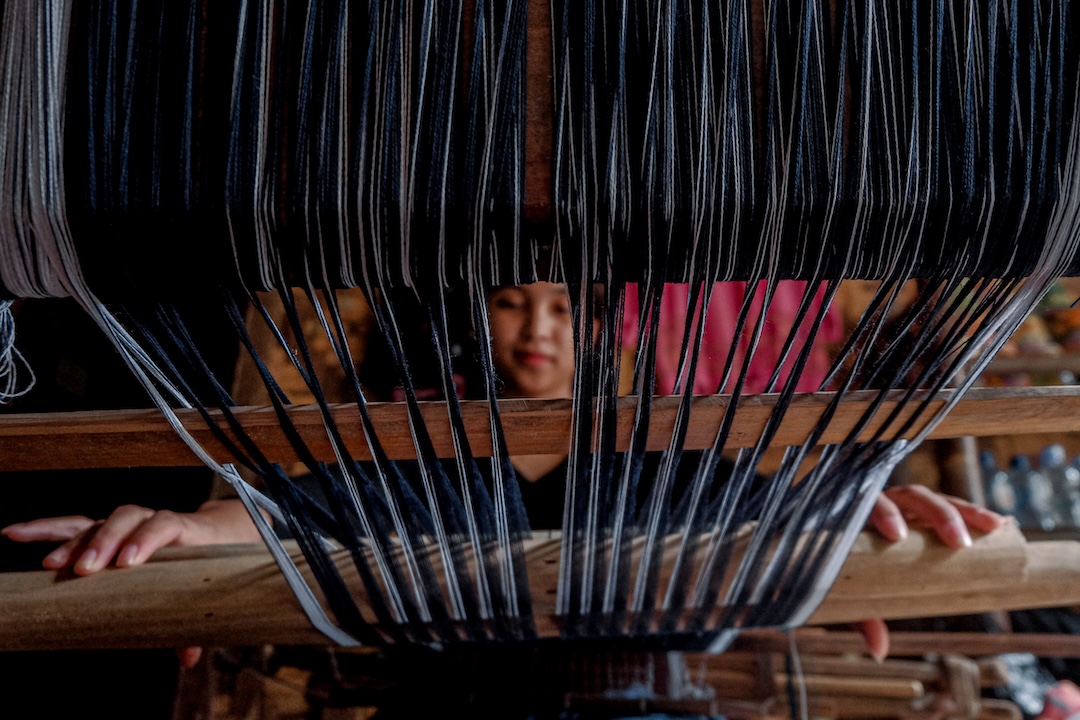
I had a vision for what childhood should look like, and the threads were weaving differently than my plan. They seemed to be unravelling. This was outside of my control. It was ours to embrace. Initially when a tapestry or rug is being woven, we can’t see the full story. Just the hints, zig-zags and flowing threads of what is to come. I was planning for something orderly and pretty, but the threads were weaving into something like spilled paint.
The weaving has continued and now I see the patterns and beauty of a still incomplete picture that is developing. I get it. I was anticipating something familiar and standard, but the results are more akin to a Jackson Pollock. It was too soon for me to understand, and it’s okay if you’re not there, yet, either. But the specialist was right. My son is amazing and that includes his dyslexic profile. His brain wiring and the weaving of the threads are exactly what they should be.
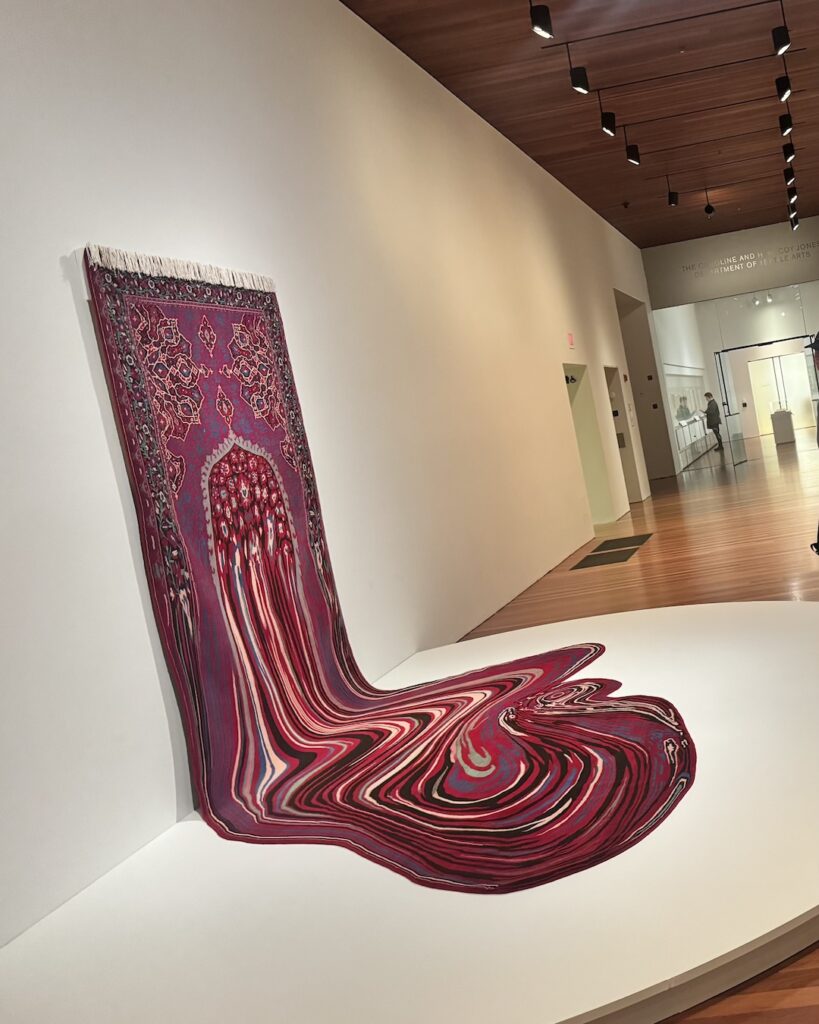
This image above is a textile art piece housed at the De Young Museum in San Francisco. Doubts? 2020, by Faig Ahmed. My field trip photo doesn’t do it justice; it’s a feast for the eyes. You’ll agree it’s certainly not typical. But that’s what makes it glorious, don’t you think? Rugs are usually…still. And flat. But, this one has a kind of motion to it. A story. It converges surrealism with over 2000 years of traditional Azerbaijani carpet weaving. You could see how in the hand-weaving process, someone could have looked over Ahmed’s shoulder and suggested the project was falling apart. Gone awry. But it’s not a mistake or a problem. It’s intricate and complex. It’s just different. It’s beautiful.
This by no means diminishes your struggle. It’s real. I do think embracing the shiny bits are the part of this that carries you through. More importantly, it’s what carries your child through. So let’s talk about the strengths of a dyslexic learning profile. Keep in mind, dyslexia is a spectrum of possibility. Each person has their uniqueness. We’re a bunch of snowflakes! 🙂
Imagination and Creativity: Dyslexics are outside-the-box thinkers. Creativity and Imagination are their jam. Let’s just run through a quick list of creative dyslexics: Steven Spielberg, Whoopi Goldberg, Orlando Bloom, Kiera Knightley, Ansel Adams. Arguably Beethoven. (Just look at a handwriting sample!)
Pattern Recognition. Problem Solving. Connecting: Pattern recognition is part of what makes them shine in the arts and music. They are able to see the big picture and how all the details are contributing to the whole. Albert Einstein has been identified as having the traits of a dyslexic learning profile.
Story telling: While they may need a little technology support getting their thoughts on paper, dyslexics are amazing story tellers. They’re creative and thinking from unexpected perspectives, plus they are good at making connections with ideas and people. They can craft a story! F. Scott Fitzgerald, Agatha Christie, Hans Christian Andersen, Jonathan Mooney.
Visualizing. I’ve joked that if you’re ever in a Tetris tournament, you’ll want to recruit your dyslexic friend to be on your team. Dyslexics often have amazing strengths in visualizing. The can hold onto a shape in their mind and turn it. That’s why q and p flip so easily. They aren’t nailed down and these amazing brains hold onto things in such a unique and beautiful way. Dyslexic learners make fabulous artists. They are idea people. They are creators. Pablo Picasso, Andy Warhol, Leonardo DaVinci and Rodin all presented documented, observable dyslexic traits. Dyslexics make great architects. Architect Richard Rogers shares his story and encouragement here.
Leadership Skills. Innovators: Recent research has suggested that 40% of entrepreneurs are dyslexic. Does it surprise you to know that Thomas Edison was dyslexic? Steve Jobs? Richard Bransen? Charles Schwab? Henry Ford? Barbara Corcoran of Shark Tank?
Empathy, Resilience, Emotional Intelligence: Dyslexics tend toward these awesome traits.
Here are some of my favorite resources for learning more about dyslexic strengths.
- Made by Dyslexia ~ Wonderful video shorts and summarized sheets about dyslexic strengths. I love how they say you can recognize dyslexia by its strengths. It’s true. I have identified people as dyslexic from their creativity as the leading sign.
- The Dyslexic Advantage, by Brock and Fernette Eide. Great book for understanding Dyslexia’s strengths. They also coined the term, stealth dyslexia.
- Upside-Down Brilliance: The Visual-Spatial Learner, by Linda K. Silverman. Another must-read. Hopefully at some point they do a reprint so it’s easier to acquire a copy as this is a staple.
What strengths have you noticed in your dyslexic loved one?
Warmly,
Christina
Leave a Reply